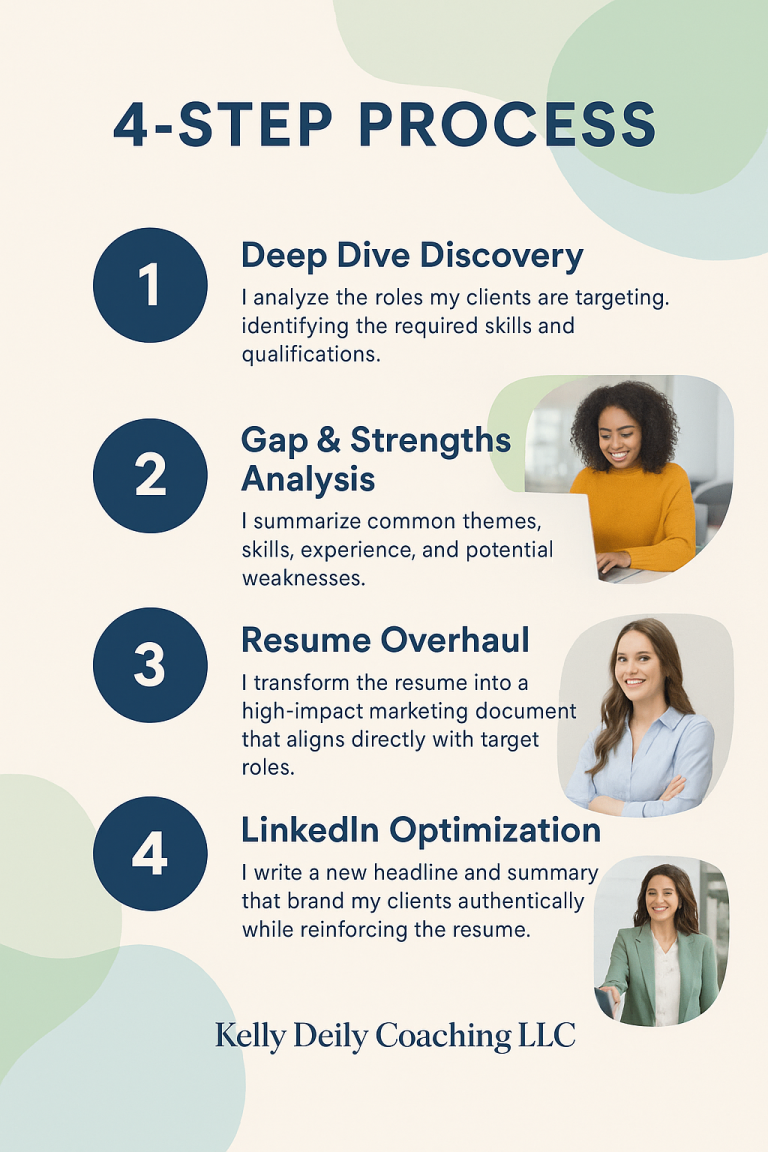
Why Job Searches Stall When You Focus on One Piece
There is a pattern I have noticed in how many professionals approach their job search, especially after they have been trying for a while without seeing results. They tend to focus on one piece of the process and expect it to solve everything.
Sometimes that looks like updating a resume or LinkedIn profile and hoping that will generate traction. Other times, it looks like investing in coaching to gain clarity or direction, while leaving outdated materials untouched. In both cases, the intention is understandable. People are trying to make progress. They are taking a step, but often, that step is only part of what is needed.
In my work, I see this play out in different ways. I have worked with individuals who have been job searching for months, sometimes close to a year, and want to focus solely on their resume and LinkedIn. They are hoping that stronger materials will unlock new opportunities. At the same time, I have worked with clients who are clear that they need to make a significant career shift and invest in coaching to figure out what comes next, but are hesitant to revisit how they are currently presenting themselves on paper. Both approaches make sense on the surface. Yet, when one part of the process is addressed in isolation, progress often remains limited.
A job search is not made up of separate, independent pieces. It is an interconnected process. Your direction, your positioning, your materials, your networking approach, and your interview strategy all need to align. When one area is out of sync with the others, it creates friction. Opportunities feel harder to access. Conversations do not convert. Momentum stalls.
For example, if your resume and LinkedIn are not aligned with where you want to go next, you may continue attracting opportunities that reflect your past rather than your future. On the other hand, if you have done the work to gain clarity on your next step but your materials still tell an outdated story, you may struggle to get in front of the right people. In both cases, the effort is there, but the results do not match. This is often the moment when frustration builds. People start to question whether the market is the issue or whether something else is missing. In many cases, it is not about effort. It is about alignment.
It is also important to acknowledge that not every professional needs every component. There are individuals who know exactly what they want to target, are confident in interviews, and simply need their materials refined. There are others who are not actively job searching and are focused on leadership development or growth within their current organization. In those cases, a more focused approach is the right call. However, for the majority of job seekers, especially those who have been searching for an extended period of time without meaningful progress, there is often more work to be done beneath the surface.
What I often help clients see is that investing in one piece of the process is rarely what creates meaningful change. It is the combination of clarity, positioning, and execution that moves things forward. When those elements start to work together, the job search begins to feel different. Conversations become more aligned. Opportunities make more sense. Confidence increases because there is a clear direction behind each step.
There is also a practical side to this that is worth acknowledging. It can feel easier to focus on one area, whether that is updating a resume or working through career direction. Expanding the scope of the work can feel like a bigger investment of both time and money. But when key pieces are left unaddressed, it often leads to a longer, more frustrating search. What initially feels like a smaller investment can end up costing more in the long run in terms of missed opportunities and extended timelines.
This is something I think about often in my work with clients. The goal is not to do more for the sake of doing more. It is to focus on the areas that will create real movement. Sometimes that means going deeper than expected. Sometimes it means addressing parts of the process that were initially overlooked.
For professionals who feel like they are doing all the right things but not seeing results, it is often worth stepping back and asking a different question. Not “What else can I do?” but “What might be missing?”
That shift in perspective is often where progress begins.