You’re Not Being Overlooked. You’re Being Misunderstood.
One of the most frustrating parts of a job search is knowing you have the experience to do the job and wondering why employers don’t seem to see it. You find a role that feels like a strong match. You meet most, if not all, of the qualifications. You spend time tailoring your resume, submit the application, and hear nothing.
So you edit your resume again.
And again.
And again.
I talk to professionals who have revised their resumes dozens of times. One client estimated he had revised his close to 200 times. He changed a few bullets, added more keywords, rewrote the summary, moved sections around, and experimented with one page versus two. He ran it through AI. Then he applied again and got the same result.
I hear versions of this from many of my job-seeking clients. If this sounds like you, you’re not alone.
At some point, it’s worth asking different questions: What if the problem isn’t that you need to keep rewriting your resume? What if employers simply aren’t seeing the value you would bring to the role?
A Strong Career Does Not Automatically Create a Strong Story
This is especially common among experienced professionals. The longer you have worked, the more you have accumulated. Different roles. Promotions. Projects. Technical skills. Leadership responsibilities. Industry knowledge. Accomplishments. All of that experience is incredibly valuable but it can also make you harder to position.
When someone has done a lot of different things well, the temptation is to put everything on the resume. The thinking is understandable: If employers can see everything I’m capable of, surely they’ll recognize my value. Unfortunately, that can have the opposite effect.
A hiring manager should not have to study your resume to figure out your key value proposition. They shouldn’t have to connect the dots between what you’ve done and what they need, and they certainly aren’t going to spend 10+ minutes trying to determine which parts of your background are most relevant. Your materials need to make that connection clear.
The Real Issue May Be Positioning
This is where I think many job seekers get stuck. They assume that if they aren’t getting interviews, something must be wrong with their resume (or they blame the ATS or AI.) When I review someone’s resume, I’m not just looking at formatting, keywords, bullet points, or whether it should be one page or two. I’m asking bigger questions:
What is this person’s top 2-3 relevant skills?
What does an employer need to understand about them almost immediately?
What problems can they solve?
Does the experience they’ve chosen to highlight support the role they’re pursuing?
Is there a clear connection between what they’ve accomplished and what this employer needs?
These questions go beyond making a few key word changes. You can rewrite the same bullet ten different ways, but if the overall positioning is unclear, the eleventh version probably isn’t going to change the outcome.
Positioning Requires Choices
Good positioning requires making choices about what you want an employer to notice. Your resume does not need to document everything you’ve ever done. It needs to make the most relevant parts of your experience easy to understand. This means some accomplishments deserve significant space and others deserve very little. It also means two people with similar backgrounds could need very different resumes depending on where they want to go next. This is why I don’t believe in stuffing a resume with keywords from a job description and calling it tailored. Keywords matter, but they cannot compensate for unclear positioning.
An employer still needs to understand the bigger picture: Why you? Why this role? Why does your background make sense for what they need? The goal is not to tell employers everything about you. The goal is to make sure they understand the right things about you.
Yes, People Still Get Interviews From Cold Applications
Networking matters. Referrals matter. Knowing someone inside an organization can absolutely help you get noticed, and I encourage my clients to build relationships as part of their job search. However, sometimes you don’t know anyone and due to timing, you need to apply cold.
It’s a necessary evil of the job search, and despite what you may hear online, cold applications are not automatically a waste of time. I have seen many clients land interviews from cold applications after we repositioned their materials. The goal is to ensure that when you do apply cold, you’re giving the employer a clear reason to want to talk to you.
If you have submitted 100 applications without receiving an interview, my first recommendation would not be to submit another 100. I would want to look at what you are targeting and how you are positioning yourself for it.
Your Experience May Not Be the Problem
After months of applying without getting interviews, it’s easy to start wondering whether you simply aren’t competitive anymore. Maybe your experience isn’t impressive enough. Maybe you need another certification or master’s degree. Maybe you’re overqualified. Maybe you need to lower your expectations. Maybe the market has simply decided there is no place for you. SO MANY MAYBES!!!
This is an extraordinarily difficult job market, but for many experienced professionals I work with, lack of experience isn’t the problem. The positioning is. The good news is that positioning is something you can change.
I have worked with professionals across finance, analytics, marketing, operations, technology, and other business functions who had years of strong experience but struggled to communicate their value clearly. Often, they didn’t need to become more qualified. They needed employers to better understand why their qualifications mattered.
Before You Rewrite Your Resume Again
Before you change another bullet, step back and ask yourself: What are the two or three things I need an employer to understand about me after reading this resume? Then look at the document through that lens. If those messages are difficult to identify, another round of wordsmithing probably isn’t the answer. You may need to rethink the story you are telling and how you are positioning yourself for the opportunities you want.
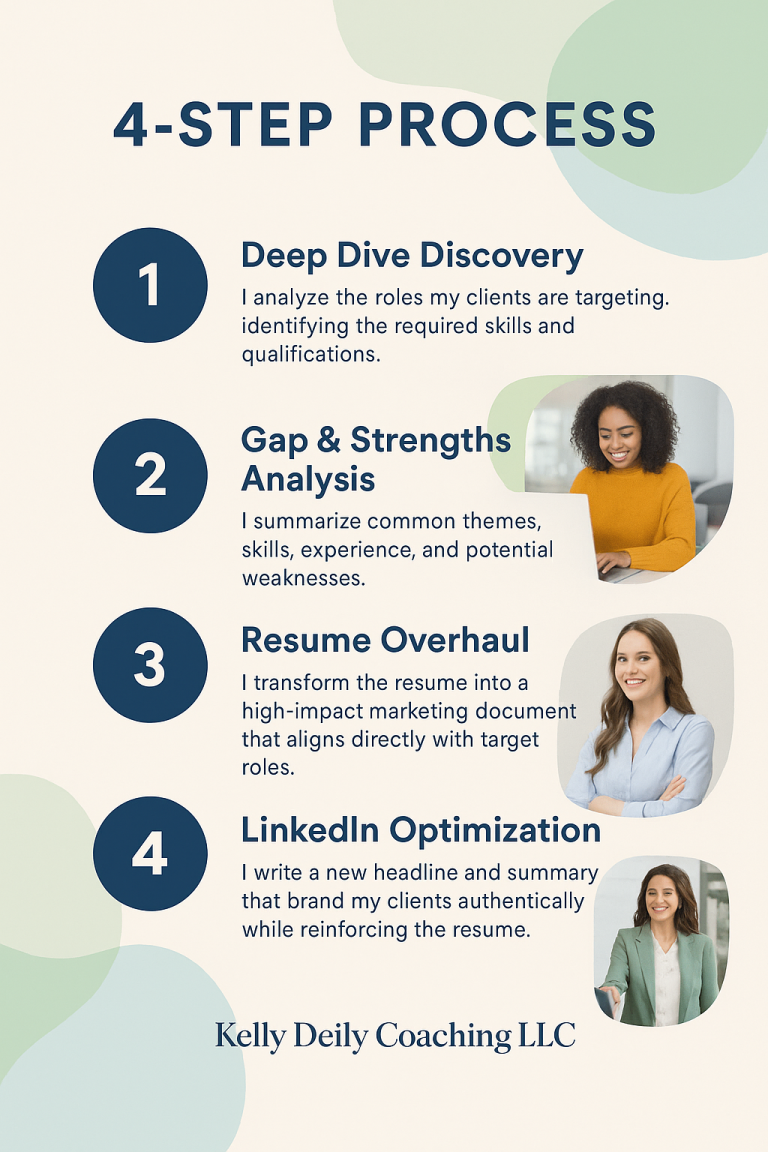
That is a significant part of the work I do with my clients. I help experienced professionals clarify what they are targeting, identify the value they bring to those opportunities, and position their experience so employers can understand that value quickly.
Because after the 50th, 100th, or 200th application with no interview, “keep applying” is not a strategy. At some point, it makes sense to step back and examine whether you’re clearly communicating the value you already have. Positioning matters not only on your resume and LinkedIn profile, but also in your networking conversations and interviews.
If you have the experience but aren’t getting the interviews, let’s figure out where the disconnect is. I can help you position yourself for the opportunities you want and create materials that give employers a clear reason to talk to you.